
Table of Contents
ToggleIn a world where toddlers seem to have more energy than a double shot of espresso, finding the right activities can feel like searching for a needle in a haystack. Enter Montessori activities—your secret weapon to channel that boundless energy into something productive and downright fun. These hands-on experiences don’t just keep little ones occupied; they spark curiosity and foster independence, all while keeping parents’ sanity intact.
Overview of Toddler Montessori Activities
Engaging toddlers with Montessori activities offers hands-on learning experiences tailored for their developmental needs. These activities foster curiosity, independence, and problem-solving skills, making them particularly effective for energetic young learners.
Montessori activities typically include practical life exercises, sensory explorations, and artistic projects. Practical life exercises such as pouring, buttoning, and sweeping develop fine motor skills and enhance concentration. Sensory activities like feeling different textures or sorting colors refine sight, touch, and sound while promoting cognitive development.
Artistic projects can also play a significant role in fostering creativity. Activities such as painting, drawing, and crafting encourage self-expression. Incorporating natural materials, like leaves and rocks, enhances these artistic experiences and makes them even more engaging.
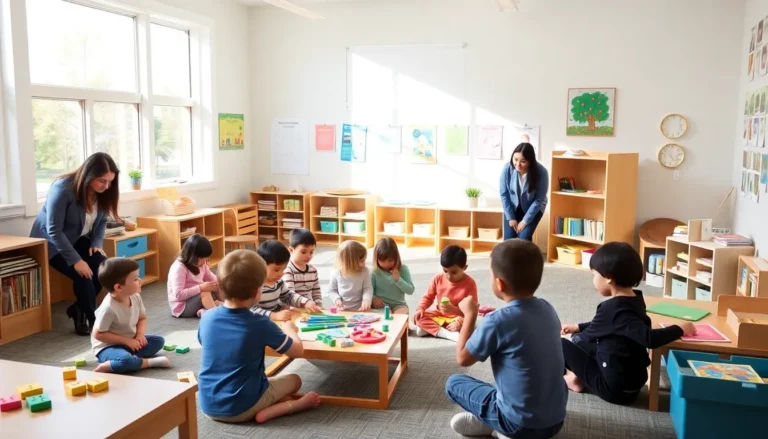
Building a stimulating environment is crucial for success. Arranging materials within reach fosters independence, enabling toddlers to choose their activities freely. As they explore, they develop decision-making skills and gain confidence in their abilities.
Montessori activities support social interaction as they frequently include collaborative play. Group activities like matching games or building block structures encourage teamwork and communication among toddlers.
Incorporating these various elements into a child’s daily routine can transform learning into a fun and enriching experience. Each activity not only captivates toddlers’ attention but also instills valuable skills that benefit them as they grow.
Benefits of Toddler Montessori Activities
Toddler Montessori activities offer numerous advantages for young learners. These hands-on experiences encourage development across various domains, shaping well-rounded children.
Cognitive Development
Cognitive growth thrives through Montessori activities. Engaging tasks stimulate curiosity and critical thinking. Problem-solving exercises challenge toddlers to think independently. Exploration of different materials enhances sensory perception. Activities like sorting or matching foster memory skills. Each experience promotes understanding of cause and effect. These activities cultivate a love for learning that lasts a lifetime.
Motor Skills Enhancement
Montessori activities significantly improve fine and gross motor skills. For instance, pouring exercises develop hand-eye coordination. Manipulating small objects sharpens dexterity and grip strength. Puzzles encourage spatial awareness and problem-solving. These activities require toddlers to use their hands efficiently. Increased hand strength helps with later writing skills. Engaging with various textures exposes them to diverse tactile experiences.
Social Skills Improvement
Social skills flourish during collaborative Montessori activities. Small group exercises promote sharing and turn-taking. Communication develops as toddlers interact with peers. Role-playing concepts teach empathy and understanding of different perspectives. Constructive play encourages teamwork and conflict resolution. Engaging with others nurtures friendships and builds confidence. These experiences prepare young children for social interactions in other settings.
Popular Toddler Montessori Activities
Montessori activities cater to the unique developmental needs of toddlers, engaging them in meaningful learning experiences. Below are some popular types.
Practical Life Activities
Practical life activities play a crucial role in developing independence and coordination. Pouring, spooning, and buttoning tasks enhance fine motor skills, allowing toddlers to manage daily tasks. Engaging in these activities builds confidence as children learn to accomplish goals independently. Preparing snacks or caring for plants fosters responsibility and a connection to their environment. Completing household chores becomes a valuable learning opportunity rather than just a task.
Sensorial Activities
Sensorial activities stimulate a child’s senses and promote cognitive development. Sorting and classifying objects based on various attributes encourages critical thinking skills. Exploring textures, smells, and sounds helps toddlers refine their sensory perceptions. Activities may include matching fabrics or experimenting with different tools that produce distinct sounds. Such exploration not only enhances focus but also cultivates an understanding of the world around them.
Language Development Activities
Language development activities immerse toddlers in a rich linguistic environment. Activities like storytelling, rhyming games, and vocabulary cards expand a child’s language skills. Interacting with books sparks imagination and fosters a love for reading. Introducing songs and chants develops listening skills while making learning enjoyable. These activities not only enhance vocabulary but also lay the foundation for future communication skills.
Math Activities
Math activities introduce toddlers to fundamental mathematical concepts through hands-on experiences. Counting objects, such as beads or blocks, helps toddlers grasp number recognition and quantity. Engaging in simple addition and subtraction tasks reinforces problem-solving abilities. Shape sorting and patterning activities build spatial awareness and analytical thinking. These experiences create a solid foundation for mathematical understanding in later years.
Tips for Implementing Montessori Activities at Home
Creating a Montessori-friendly home environment invites toddlers to explore and learn independently. A child-centered space encourages curiosity and engagement with activities.
Creating a Montessori-Friendly Environment
Start by designating specific areas for various activities. Arrange shelves at a toddler’s height, promoting accessibility to materials. Use natural light to enhance the atmosphere, making spaces welcoming and inviting. Incorporate minimal distractions, allowing children to focus on tasks. Ensure materials are organized for easy selection, fostering independence. Rotate activities regularly to maintain interest and challenge skills. Include elements of nature, like plants or natural materials, to stimulate sensory experiences.
Choosing the Right Materials
Select diverse materials that align with toddlers’ developmental stages. Prioritize open-ended resources, like blocks or art supplies, which foster creativity. Choose items that promote fine motor skills, such as tongs or beads for sorting. Incorporate sensory-rich tools, including textured fabrics or sound shakers, for exploration. Opt for age-appropriate books that enhance language development and storytelling. Always consider safety in material selection to ensure a secure learning environment. Lastly, regularly assess and update materials to keep the learning experience fresh and engaging.
Toddler Montessori activities offer a dynamic approach to early learning that nurtures curiosity and independence. By engaging in hands-on experiences, toddlers not only develop essential skills but also cultivate a love for exploration and discovery. Creating a Montessori-friendly environment at home allows children to thrive as they choose activities that resonate with their interests.
Incorporating these activities into daily routines can significantly enhance cognitive, motor, and social development. With the right materials and a thoughtfully arranged space, parents can foster an enriching atmosphere that promotes lifelong learning. Embracing the Montessori method equips toddlers with the tools they need to navigate their world confidently and creatively.