
Table of Contents
ToggleTransitioning from crib to toddler bed can feel like a circus act, but it doesn’t have to be a juggling act of chaos. Enter the Montessori toddler bed—a game changer that turns bedtime into a delightful adventure. Designed to empower little ones, these beds encourage independence and exploration, all while keeping safety in mind.
Imagine a bed that’s not just a place to sleep but a cozy launchpad for your child’s imagination. With low-to-the-ground designs and open structures, Montessori toddler beds invite kids to hop in and out with ease, making them feel like the kings and queens of their own little kingdom. Say goodbye to bedtime battles and hello to a world where your toddler can snooze in style and comfort.
Overview of Montessori Philosophy
Montessori philosophy emphasizes fostering independence and holistic development in children. It promotes self-directed learning through hands-on experiences and encourages exploration at a child’s own pace. Flexibility in the learning environment plays a crucial role, allowing children to choose activities that engage their interests.
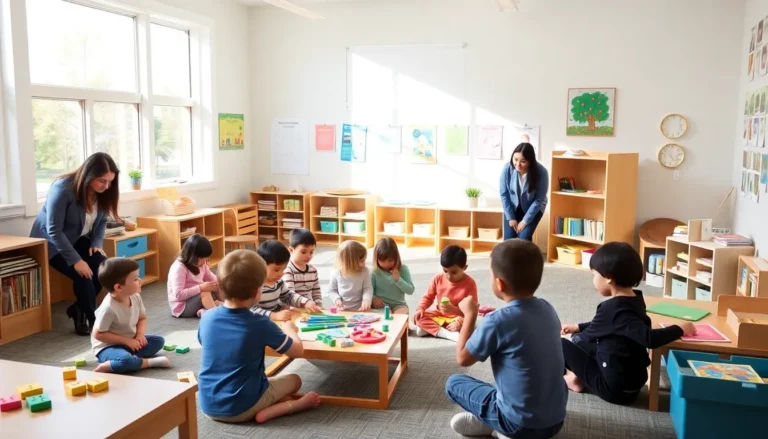
Learning spaces focus on natural materials and aesthetically pleasing designs. Practical life skills, sensory experiences, and social interactions all come together to create a nurturing atmosphere. The environment often includes child-sized furniture and accessible resources that invite participation.
Children learn best when allowed to explore freely. Rather than imposing traditional methods, Montessori promotes a child’s innate curiosity. Teachers serve as guides, tailoring support based on each child’s unique interests and developmental stages.
Montessori principles extend beyond the classroom into daily life. Routines at home can reflect these methods, paving the way for better transitions, particularly during the shift to a toddler bed. This approach aligns well with Montessori toddler beds, as these beds facilitate the same sense of independence and accessibility.
Safety remains a key consideration in the Montessori philosophy. Secure environments enable children to explore while minimizing risks. By designing spaces that promote autonomy and creativity, parents can cultivate a child’s confidence and decision-making skills.
Montessori encourages a partnership between adults and children. By respecting a child’s choices and providing a supportive atmosphere, development flourishes. Each element of this philosophy, including the transition to a toddler bed, contributes to building a well-rounded, independent learner.
Benefits of Toddler Bed Montessori
Montessori toddler beds offer several advantages that contribute to a child’s growth and development. They not only support independence but also ensure safety and comfort for little ones.
Independence and Freedom
Independence fosters self-confidence in children. With Montessori toddler beds, kids can freely climb in and out, encouraging exploration. Self-direction is promoted as children learn to manage their sleep routines. They gain a sense of ownership over their sleeping space, enhancing their decision-making skills. This setup aligns well with the Montessori philosophy of child-led learning. Additionally, the design invites imaginative play, allowing children to create their own environments.
Safety and Comfort
Safety stands out as a primary concern for parents. Montessori toddler beds typically sit low to the ground, minimizing the risk of injury during falls. Open structures facilitate easy access, enabling children to lay down or get up with minimal assistance. Comfort is also inherent in these designs, as many use natural materials that promote better sleep. A secure environment contributes to tranquility, helping little ones settle down at bedtime. Overall, this bed design supports a nurturing atmosphere where children feel safe to rest and recharge.
Types of Toddler Bed Montessori
Montessori toddler beds come in various styles, each promoting independence and safety for young children. The two primary types are low beds and floor beds.
Low Beds
Low beds provide a secure sleeping environment, designed to sit close to the ground. They enable toddlers to climb in and out easily without needing assistance. This independence fosters self-confidence as children learn to manage their sleep routines. Typically, these beds have guardrails that add an extra layer of safety. Natural materials like wood often feature prominently, promoting a sense of calm. A low bed’s minimalistic design complements any room decor, making it a popular choice for parents embracing Montessori principles.
Floor Beds
Floor beds create an open sleeping space that encourages exploration. Positioned directly on the floor, they eliminate the fear of falling, enhancing safety for toddlers. Children can freely move about the room, promoting self-directed play even before bedtime. This type of bed aligns perfectly with the Montessori philosophy of independence. With floor beds, furniture can blend seamlessly into the child’s environment, sparking imagination. Many parents find that these beds facilitate healthier sleep habits through increased comfort and ease of access.
Choosing the Right Toddler Bed Montessori
Selecting the appropriate Montessori toddler bed involves evaluating materials, design, size, and space to create an ideal sleeping environment for children.
Materials and Design
Natural materials play a vital role in enhancing safety and comfort. Many Montessori toddler beds use wood, like birch or pine, which provides durability and a warm aesthetic. Simple designs allow for easy access, promoting independence. Rounded edges enhance safety and minimize injury risks. A non-toxic finish may ensure a healthier sleeping space, reducing exposure to harmful chemicals. Colors often reflect calmness, with earthy tones creating a soothing atmosphere conducive to rest. Parents should assess craftsmanship as well; quality construction contributes to longevity and stability. Including features such as guardrails enhances safety without compromising accessibility.
Size and Space Considerations
Size significantly impacts the usability of a toddler bed. A low bed, positioned close to the ground, enables toddlers to get in and out effortlessly, which fosters self-sufficiency. Floor beds eliminate falling fears, offering a seamless transition from a crib. Consideration of room dimensions is crucial; sufficient space around the bed encourages movement and play. Leaving room for toys or a small rug enhances the area’s functionality. Flexibility can also manifest in bed designs; options like convertible beds accommodate growth. Overall, ensuring the bed fits comfortably within the child’s space enhances both safety and independence.
Tips for Transitioning to a Toddler Bed Montessori
Start the transition gradually to help the child adjust. Establish excitement around the new bed by involving the child in the process. Allow her to choose bedding or decorations that reflect her personality.
Create a familiar sleep routine that remains consistent even with the transition. Incorporate bedtime stories, soft lighting, and calming sounds to foster a positive environment. Introducing these elements makes bedtime a comforting ritual.
Encourage independence by allowing the child to climb in and out of bed. His ability to manage his own entrance and exit nurtures self-confidence. Reducing barriers enables exploration and empowers the child within the safe confines of a Montessori-designed space.
Safety remains a priority throughout the transition. Verify that the bed is low to the ground and check for rounded edges. These design aspects minimize injury risks while promoting a peaceful sleep experience.
Set boundaries in the sleeping area to ensure safety. Create a safe nearby play area to avoid potential hazards. Keeping toys and other distractions away allows for focused rest.
Communicate openly about the transition. Discuss what the new bed means and how it differs from the crib. Clarity in expectations helps the child understand this new sleeping arrangement.
Monitor the child’s reactions during the process. Observing her comfort levels gives insights into potential adjustments needed. Tailoring the experience based on feedback encourages a smoother transition.
Lastly, nurture patience and understanding. Adapting to a toddler bed can take time, and it’s normal for children to have mixed feelings. Remaining supportive during this transition fosters trust and comfort.
Transitioning to a Montessori toddler bed can be a transformative experience for both children and parents. These beds not only foster independence but also create a safe space for imaginative play and self-directed learning. By choosing the right bed and incorporating Montessori principles into the bedtime routine, parents can support their child’s growth and development.
The emphasis on safety and comfort ensures that children feel secure as they explore their newfound freedom. With patience and understanding, parents can make this transition smoother, allowing their little ones to thrive in their new sleeping environment. Ultimately, a Montessori toddler bed is more than just a place to sleep; it’s a foundation for cultivating self-confidence and independence in early childhood.