
Table of Contents
ToggleEvery parent knows that keeping toddlers entertained can feel like trying to herd cats on roller skates. Enter Montessori toddler activities—where learning meets play in the most delightful way. These activities not only engage little minds but also give parents a much-needed break from the chaos of daily life.
Overview of Montessori Toddler Activities
Montessori toddler activities focus on fostering independence and creativity. These activities align with the child’s natural development and encourage exploration. Engaging tasks include practical life skills, sensory play, and artistic expression.
Practical life activities involve real-world tasks like pouring, sweeping, or buttoning clothes. These tasks develop fine motor skills and foster confidence through mastery. Sensory play stimulates exploration using various materials like sand, water, or fabrics.
Creative activities, such as drawing or molding clay, enhance imagination and self-expression. These activities offer opportunities for sensory exploration while improving coordination. Incorporating nature walks connects toddlers with their environment, promoting curiosity and observation skills.
Montessori materials play a crucial role in these activities. For instance, simpler tasks use tangible resources to help children grasp complex concepts. Using color sorting, matching games, or puzzles, toddlers develop cognitive skills and critical thinking.
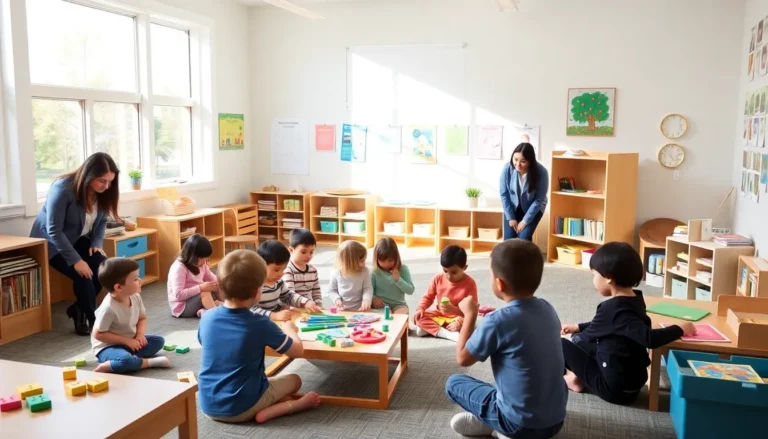
Flexible structures in Montessori activities allow children to pursue personal interests. While participating in groups, they also embrace moments of individual focus, enhancing social skills. Each activity offers a safe space for trial and error, building resilience.
Parents can implement these ideas at home or in daycare settings. Simple adjustments create an atmosphere conducive to learning while maintaining enjoyment. Participating in these experiences together strengthens parent-child relationships and enhances developmental outcomes.
Benefits of Montessori Toddler Activities
Montessori toddler activities provide numerous advantages for young children’s growth. These activities enrich cognitive, physical, and social development.
Cognitive Development
Cognitive growth occurs through hands-on experiences with Montessori materials. Engaging tasks like sorting colors or solving puzzles stimulate critical thinking. Memory enhancement is evident as toddlers follow multi-step instructions during activities. Additionally, children learn problem-solving skills independently, building a strong foundation for future learning. Observing their environment while engaging with materials encourages curiosity. Overall, these experiences facilitate a love for learning that extends beyond educational settings.
Physical Skills
Physical skills develop significantly through Montessori activities. Tasks such as pouring, buttoning, and using utensils improve fine motor abilities. Engaging in sensory play with materials like water or sand supports hand-eye coordination. Balancing during movement activities strengthens gross motor skills. Furthermore, children experience increased control and precision in their actions, which boosts confidence. Active participation in these tasks contributes to overall physical development, laying the groundwork for healthy habits.
Social Interaction
Social interaction improves as children engage in group activities. Collaborative tasks encourage teamwork and communication among toddlers. Sharing materials and taking turns fosters patience and respect for others. Observing peers during activities enhances social skills and emotional intelligence. Involving children in group settings equips them with conflict resolution strategies. Social bonds formed through these experiences promote a sense of community and belonging. Overall, these interactions prepare toddlers for future relationships and social settings.
Popular Montessori Toddler Activities
Montessori toddler activities engage children in meaningful ways, promoting their learning and development. Each type of activity serves a specific purpose.
Practical Life Activities
Practical life activities focus on everyday tasks that help toddlers gain independence. Pouring water into cups, sorting utensils, and buttoning clothes cultivate fine motor skills. Engaging in these tasks encourages concentration and a sense of accomplishment. Additionally, toddlers learn to care for their environment through activities like sweeping or wiping tables. These experiences foster responsibility and promote coordination. Parents can easily incorporate such tasks into daily routines, creating opportunities for real-world learning.
Sensory Play
Sensory play stimulates a child’s senses, enhancing exploration and discovery. Activities such as playing with sand, water, or textured materials provide rich sensory experiences. Using tools like scoops, cups, and funnels during water play allows toddlers to experiment and learn about cause and effect. Engaging in messy play, like finger painting or dough manipulation, aids in developing fine motor skills and creativity. Sensory bins filled with rice, beans, or oats also encourage imaginative play and exploration. Ultimately, sensory activities support cognitive development and help children express themselves.
Language and Literacy Activities
Language and literacy activities enhance communication skills while fostering a love for reading and storytelling. Introducing picture books or storytelling allows toddlers to connect words with images, supporting vocabulary expansion. Playing with letter blocks or magnetic letters helps children recognize shapes and sounds. Singing songs or reciting rhymes improves phonemic awareness. These activities create a foundation for literacy skills while encouraging social interaction through group storytelling or shared reading. Incorporating language-rich experiences into daily routines nurtures effective communication and confidence in expression.
Tips for Implementing Montessori Toddler Activities at Home
Creating a conducive environment supports effective learning for toddlers. A prepared environment sets the stage for independence and discovery. Organizing materials within reach encourages choice and exploration. Use child-sized furniture to promote comfort and accessibility. Consider incorporating natural elements to foster sensory experiences. Rotating activities prevents boredom and maintains engagement.
Engaging with your toddler enhances the learning process. Participation in activities together allows for shared experiences and bonding. Observing their interests guides the selection of tasks. Asking open-ended questions encourages critical thinking. Modeling techniques, such as pouring or buttoning, promotes skill development. Celebrating small achievements reinforces confidence and motivation. Prioritizing interaction transforms learning into a joyful exploration.
Montessori toddler activities offer a unique blend of learning and play that nurtures a child’s natural curiosity. By focusing on independence and creativity these activities empower toddlers to explore their interests while developing essential skills. Parents can easily implement these engaging tasks at home creating an enriching environment that promotes cognitive and social growth.
Encouraging toddlers to participate in practical life skills sensory play and artistic expression not only enhances their development but also strengthens the bond between parent and child. By embracing the Montessori approach parents can transform everyday moments into valuable learning experiences fostering a love for exploration and discovery in their little ones.