
When you think of Japanese family traditions, you might picture rigid customs involving elaborate tea ceremonies and bowing etiquette. But the truth is more vibrant and layered: these traditions are the threads that weave the fabric of daily life. They shape how families interact, celebrate, and pass values down through generations. So, grab a cup of green tea and let’s jump into the intriguing realm of Japanese family customs that are as rich as they are diverse.
The Importance of Family in Japanese Culture
Family serves as the cornerstone of Japanese society, embodying principles that resonate throughout daily life. In Japan, the concept of ‘ie’, which translates to ‘house’ or ‘family,’ represents not just a physical structure, but also a lineage and shared identity. This cultural significance places family above individual aspirations in many instances.
Part of what makes family relationships so special in Japan is the notion of ‘amae,’ which means a dependency on others. This reciprocal nurturance between family members fosters a strong bond, allowing for open emotional expression while also reinforcing the importance of duty and respect.
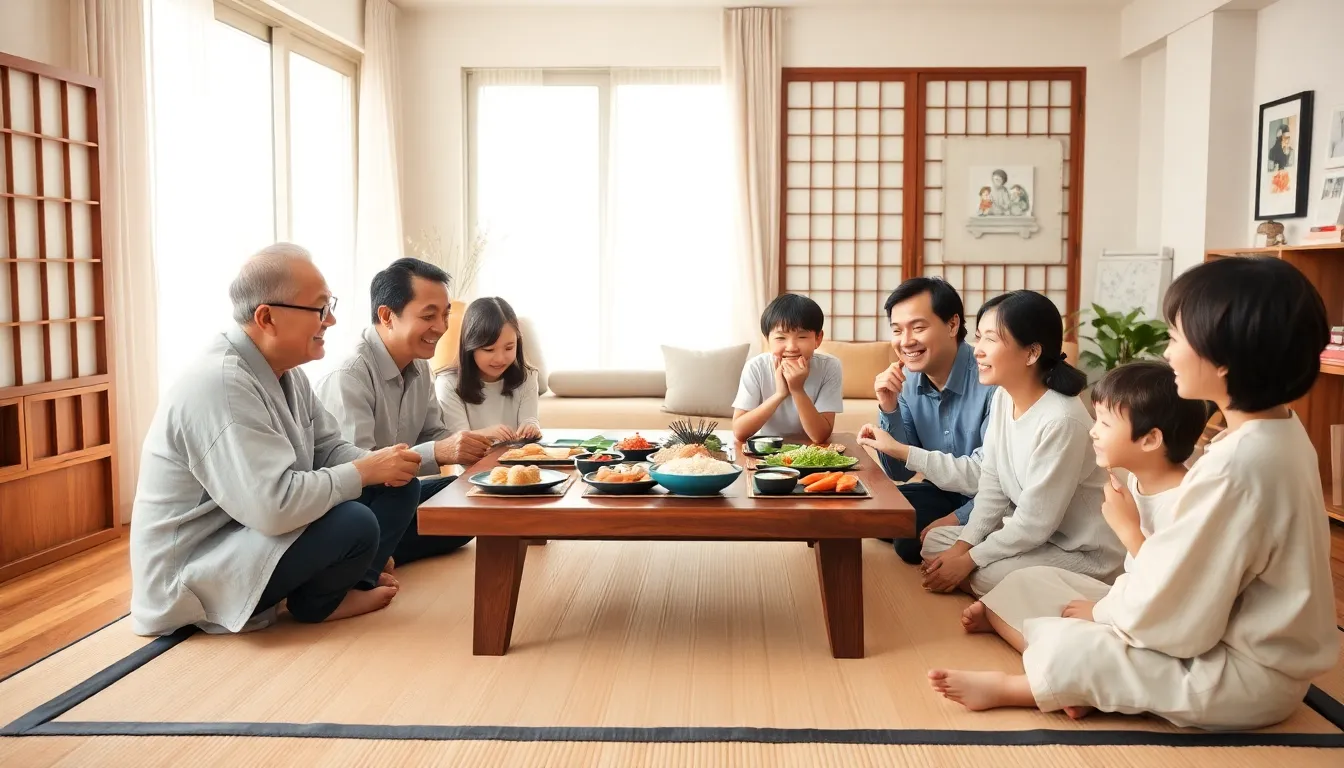
Intergenerational homes are also quite common, with grandparents, parents, and children often living together. This arrangement not only strengthens family ties but also enables the transference of wisdom and traditions from one generation to the next. So, in Japan, family isn’t just an important part of life: it is life itself.
Common Japanese Family Traditions
Japanese family traditions are laden with customs that vary between regions and families. One of the most beloved practices is ‘Osechi Ryori,’ a variety of traditional foods prepared for the New Year, symbolizing prosperity and happiness. Families often gather around the table to celebrate and share their hopes for the coming year.
Another cherished tradition is the ‘Shichi-Go-San’ festival. This festival celebrates the growth of children at the ages of three, five, and seven. Children don beautiful kimonos and visit shrines, where parents pray for their healthy growth and happiness, capturing both the familial bond and cultural heritage.
Weekly rituals often include family meals, where everyone gathers to enjoy home-cooked dishes. These gatherings foster conversation, strengthen relationships, and create lasting memories. It’s not just about food: it’s about nurturing connections and reinforcing collective identity.
Seasonal Celebrations and Festivals
Seasonal celebrations play a vital role in strengthening family bonds in Japan. Spring brings ‘Hanami,’ where families gather under blooming cherry blossoms to celebrate nature’s beauty. This community gathering is about more than just flowers: it’s a time to reflect on renewal and the passage of time.
In summer, families celebrate ‘Tanabata,’ or the Star Festival, which involves writing wishes on colorful strips of paper and hanging them on bamboo. This tradition embodies hope while also encouraging familial participation, as families come together to celebrate their aspirations.
Autumn ushers in ‘Tsukimi,’ the Moon Viewing festival. Families enjoy seasonal treats like ‘dango’ (rice dumplings) while appreciating the beauty of the full moon. This tradition not only boosts family unity, it also allows families to connect with nature and cultural heritage, reflecting on seasonal changes and the cycles of life.
Rituals and Customs in Daily Life
Daily rituals in Japanese families often carry profound significance, intertwining the threads of harmony and gratitude. For instance, families typically start their day with a morning greeting, saying ‘Itadakimasu’ before meals, which expresses appreciation for the food. This ritual fosters mindfulness and awareness of the sacrifices made for their nourishment.
Household chores are often shared among family members as a way to instill teamwork and responsibility, thereby strengthening connections within the family unit. This practice of sharing tasks fosters dialogue and promotes a supportive atmosphere.
Another significant daily ritual is the practice of ancestor worship through ‘Butsudan’ or family altars. Families honor their ancestors by making offerings and saying prayers, fostering respect for past generations and reinforcing the connection between present and lineage.
Traditional Family Values and Ethics
Japanese family values are deeply rooted in the ethical framework shaped by Confucian ideals, emphasizing respect for elders, harmony, and the collective good. These principles guide interpersonal relationships, often manifesting as an emphasis on duty and obligation toward one’s family.
Respect for elders is paramount, encouraging younger generations to seek guidance from family members with more life experience. This reverence nurtures a culture where the wisdom gleaned through years is not only honored but actively sought.
Also, the value of harmony or ‘wa’ asserts itself in family dynamics. Families prioritize collective consensus in decision-making, often leading to discussions that involve everyone’s input, thereby reinforcing team-building and unity.
Modern Influences on Japanese Family Traditions
Modernization has undeniably influenced Japanese family traditions, prompting changes in structures and dynamics. Increasing numbers of dual-income households have reshaped roles within the home, leading to more egalitarian responsibilities in child-rearing and household chores.
The assimilation of Western customs is also noticeable: for example, celebrations like Christmas and Halloween have found their way into Japanese family life, often blended with traditional customs. This merging reflects a cultural adaptability, enabling families to enjoy diverse holidays while still honoring their roots.
But, amidst these changes, many families strive to retain core traditional practices. Family meals, seasonal festivals, and day-to-day rituals still dominate, providing a counterbalance to the rapid pace of modern life, allowing families to stay connected and engaged.