

Capturing the beauty of the night sky might seem like a task reserved for professional photographers armed with fancy gear. But guess what? With just an iPhone in hand, anyone can become a stargazing superstar. Imagine dazzling your friends with stunning shots of constellations and shooting stars, all taken with the device you carry every day.
Understanding Astrophotography
Astrophotography involves capturing celestial objects through photography. Techniques range from basic to advanced. Essential considerations include exposure time, ISO settings, and image stabilization.
Exposure time plays a critical role in capturing stars. Longer exposure times allow more light to enter the lens, making faint stars visible. Typical exposure settings for an iPhone can range from 10 to 30 seconds, depending on the model.
ISO settings also influence the outcome. Higher ISO settings increase sensitivity to light, essential for dimly lit skies. However, excessive ISO can create noise, compromising image quality. Many photographers prefer an ISO range of 800 to 1600 to balance sensitivity and clarity.
Stability is vital for clear images. Handheld shots often result in blurriness due to movement. Use a tripod or place the iPhone on a stable surface.
Camera orientation matters too. Positioning the camera to avoid direct light pollution results in clearer images. If possible, shoot in a remote area with little to no artificial light, enhancing the visibility of stars.
Timing impacts photo quality. The moon phase and weather conditions greatly affect visibility. Clear nights with minimal moonlight provide the best opportunities for star photography.
Knowing the star patterns aids in composition. Familiarity with constellations boosts not just the quality of pictures, but also enhances the overall stargazing experience. Resources like star charts and astronomy apps can simplify this process.
Equipment doesn’t have to be elaborate. While professional cameras present advanced options, iPhones equipped with night mode offer a user-friendly platform for capturing stunning astrophotography. Embracing these techniques makes stellar photography accessible to everyone.
Preparing Your iPhone
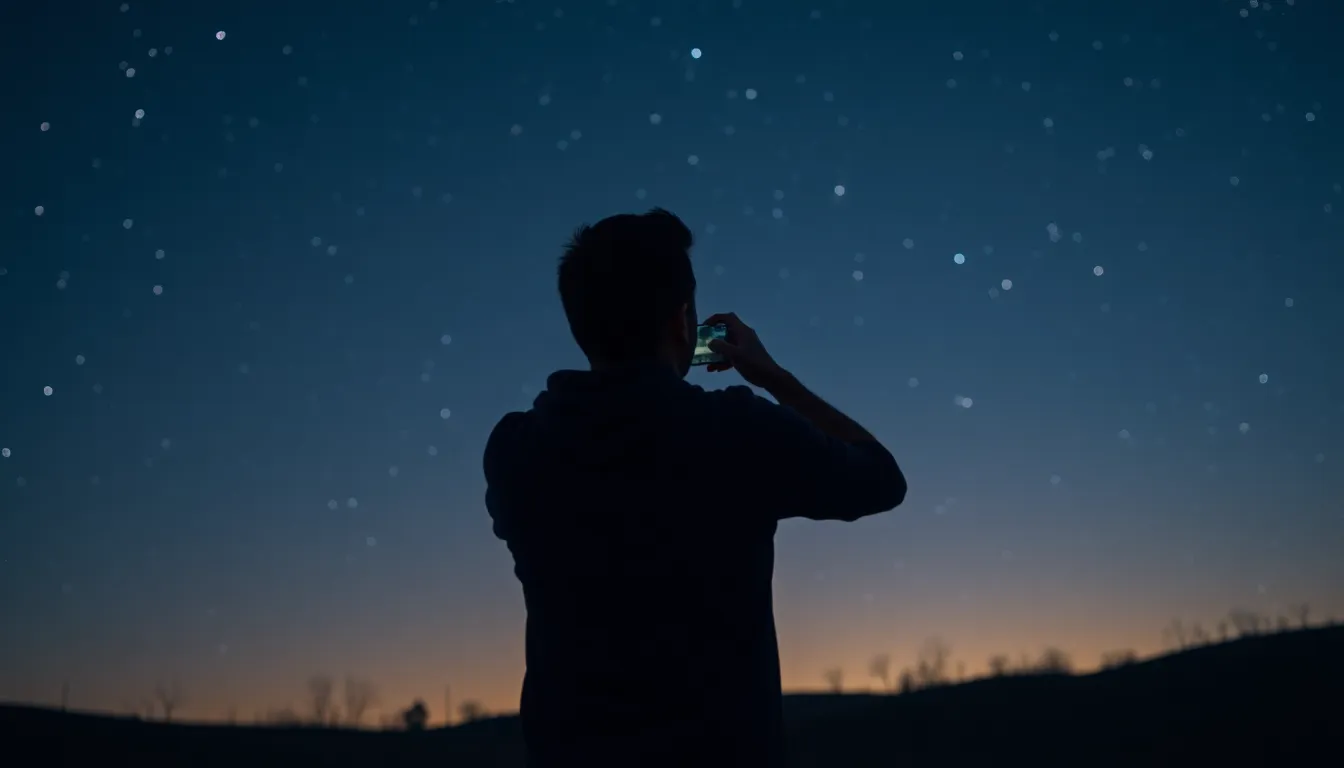
Prepping your iPhone for astrophotography enhances the likelihood of capturing stunning starry images. Two key steps involve selecting the appropriate model and ensuring your software is up to date.
Choosing the Right Model
Certain iPhone models excel at night photography due to their advanced camera features. iPhone 11 and newer versions include a dedicated night mode, making it easier to capture stars and constellations in low light. The larger sensors in these models improve light gathering capabilities. Enhanced optical image stabilization helps reduce blurriness, while multiple lenses allow for versatile compositions. Users can explore model specifications to determine the best fit for their astrophotography needs.
Updating Your Software
Keeping your iPhone’s software current significantly impacts its performance and camera features. Apple frequently releases updates that improve functionality and introduce new features. Navigating to Settings, then General, and selecting Software Update ensures access to the latest enhancements. Regular updates not only optimize existing camera capabilities but also fix bugs that might affect image quality. Performing this check before stargazing expeditions ensures the best experience and results.
Setting Up for Star Photography
Successful star photography starts with careful setup. Two key elements significantly enhance the outcome: location and stability.
Finding the Right Location
Selecting an ideal location impacts the quality of star photographs. Dark areas away from city lights provide the best backdrop for stargazing. National parks and remote beaches often feature minimal light pollution, enhancing visibility. Users should also consider weather conditions when choosing a spot. Clear skies with minimal cloud cover yield optimal results. Accessibility of the location matters, too. Ensure it’s easy to reach, especially during nighttime. Researching local astronomy clubs or online resources can uncover excellent sites for shooting stars.
Using a Tripod
Stability plays a critical role in capturing clear images. Using a tripod eliminates camera shake during long exposure shots. A sturdy tripod allows for precise alignment with celestial bodies. For users without a tripod, a stable surface can work as a substitute. Various options such as picnic tables or rocks can provide necessary support. Adjusting the tripod’s height enables users to find optimal angles for capturing the night sky. Taking a moment to set up properly prevents blurry photos and enriches the overall experience of astrophotography.
Camera Settings for Night Sky Photography
Capturing stunning images of the night sky requires the right camera settings on an iPhone. Understanding how to adjust exposure and focus correctly enhances astrophotography results.
Adjusting Exposure
Set your exposure time between 10 and 30 seconds for optimal star visibility. Longer exposure times capture faint celestial bodies, while shorter times avoid trails from star movement. Utilize the iPhone’s night mode, which automatically adjusts exposure settings based on the environment. Users should tap on the screen to manually adjust exposure if the automatic setting doesn’t provide desired results. Lowering the ISO to around 800 minimizes noise while still gathering ample light. Experimenting with these settings leads to clearer images of stars and constellations.
Focusing on Stars
Ensuring sharp focus on stars enhances image clarity. Tap on a star to set focus manually, allowing precise adjustments for clear details. Automatic focusing may struggle in low light; therefore, manual adjustments become vital. Keeping the iPhone steady while focusing prevents unwanted blurriness. If circumstances allow, consider using an external app that offers manual focus settings for better control. Trying different focus points across the sky improves composition and highlights various celestial features.
Taking the Perfect Shot
Capturing stunning star photography on an iPhone hinges on a few key techniques.
Composition Tips
Thoughtful composition enhances the quality of astrophotography. First, use the rule of thirds, positioning stars and constellations along the intersecting lines for visual balance. Experiment with foreground elements, such as silhouettes of trees or mountains, to add depth. Including a distinct subject, like the Milky Way or a prominent constellation, draws the viewer’s eye. Consider the horizon’s placement; keeping the sky expansive creates a more immersive experience. Lastly, adjust angles to find unique perspectives that capture the night sky’s majesty.
Experimenting with Long Exposures
Long exposures unlock detailed star photography on iPhone. Start by setting exposure times between 10 and 30 seconds to illuminate fainter stars. Using night mode simplifies adjustments, automatically optimizing settings for low light. Adjusting exposure manually can also yield dramatic results, especially in complex scenes. Utilize a tripod or stable surface to minimize camera movement during these extended captures. Experimenting with different exposure times reveals various star trails and patterns, allowing unique shots that showcase the night sky’s beauty.
Capturing the stars with an iPhone is an achievable goal for anyone passionate about photography. By understanding key techniques and settings, users can transform their night sky experiences into stunning images. With the right preparation and knowledge of camera features, even beginners can create impressive astrophotography.
Choosing the perfect location and ensuring stability are vital steps toward success. Experimenting with different settings and compositions allows for unique interpretations of the night sky. As technology continues to evolve, iPhones offer powerful tools for aspiring photographers to explore the cosmos. With a little practice, anyone can master the art of star photography and share their celestial journey with the world.