
Table of Contents
ToggleIn a world where toddlers seem to have boundless energy and curiosity, the Montessori toddler classroom stands out as a magical realm of learning. Picture a space where tiny hands explore, tiny minds discover, and tiny feet wander freely—all while learning the art of independence. It’s like a playground for the brain, minus the sand and swings!
This innovative approach to early education transforms traditional learning into an exciting adventure. Imagine your little one mastering life skills while engaging in hands-on activities that spark their imagination. Montessori classrooms are designed to nurture a child’s natural desire to learn, making education feel less like a chore and more like a delightful quest. If you’re ready to dive into the wonders of Montessori education, buckle up! You’re about to embark on a journey that could change the way your toddler interacts with the world.
Overview of Montessori Toddler Classroom
Montessori toddler classrooms create a nurturing environment that encourages independent learning. These settings empower children through exploration and discovery.
Principles of Montessori Education
Montessori education centers on child-led learning. It respects a child’s natural development, fostering autonomy in learning. This approach emphasizes hands-on activities using real-world materials. Children engage in meaningful tasks that promote cognitive and social skills. Collaborative play occurs within mixed-age groups, enhancing peer interaction. The environment is thoughtfully designed, providing freedom of choice while ensuring safety. Teachers serve as guides, observing children and facilitating exploration based on their interests.
Benefits of a Montessori Approach
Montessori classrooms cultivate critical thinking and problem-solving skills. Independence is not just encouraged; it is a critical component of development. Children gain confidence while making choices in their learning process. Emphasis on practical life skills prepares toddlers for everyday tasks. This method enhances focus and concentration through engaging activities. Social skills flourish as children interact and collaborate with peers in a respectful manner. The overall approach nurtures a love for learning that extends beyond the classroom.
Classroom Environment
The Montessori toddler classroom creates a vibrant atmosphere for exploration and learning. Several key elements contribute to this nurturing environment.
Design and Layout
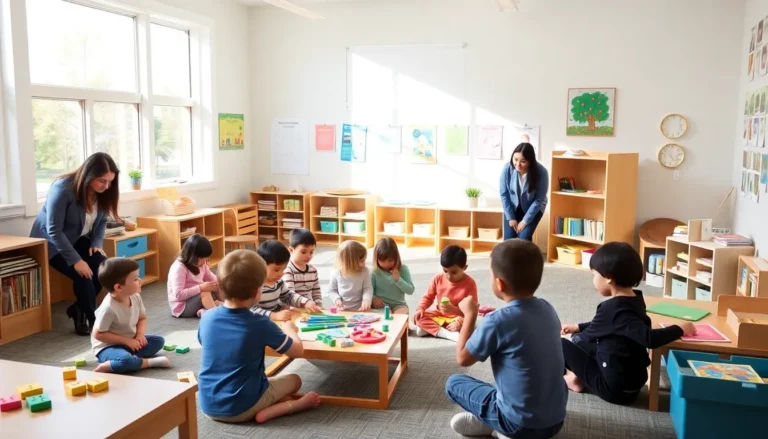
The classroom design prioritizes accessibility and functionality. Spaces offer diverse activity areas that encourage movement and choice. Flexible layouts foster interaction among toddlers to inspire collaboration during play. Thoughtfully arranged furniture supports independent exploration and creates a sense of order. Natural light illuminates the space, promoting a calm and inviting feel. Children engage with materials at their level, enhancing their sense of ownership in the environment.
Materials and Resources
Montessori classrooms feature carefully selected materials that enhance learning. Real-world tools encourage practical skills and imaginative play. Resources engage multiple senses, aiding in cognitive development. Manipulatives, such as building blocks and puzzles, promote problem-solving abilities. Open-ended materials, like art supplies, stimulate creativity and self-expression. Diverse resources support varied interests, catering to the individual needs of each child.
Learning Activities
Montessori toddler classrooms feature various learning activities that engage children through exploration. Two primary categories include practical life skills and sensorial activities.
Practical Life Skills
Practical life skills focus on everyday tasks that foster independence. Children learn to pour, scoop, and transfer materials, enhancing fine motor skills. They also engage in activities like dressing frames and buttoning, building confidence in personal care. Cleaning and organizing materials establishes responsibility and respect for the environment. These tasks encourage focus and concentration as toddlers develop a sense of achievement. Through repetition, they master these skills, benefiting their overall development.
Sensorial Activities
Sensorial activities cultivate awareness of the world. These experiences stimulate the senses, helping children differentiate shapes, colors, and textures. Materials like color tablets and sound boxes provide engaging ways to explore sensory elements. Activities encourage observation and classification, essential for cognitive growth. Engaging with these materials fosters concentration, as toddlers explore and manipulate them independently. Through hands-on experiences, they build skills that establish a strong foundation for future learning.
Role of the Educator
In a Montessori toddler classroom, the role of the educator centers on facilitating exploration and nurturing independence. Educators serve as guides, observing children’s interests and interactions, while encouraging self-directed learning.
Guide vs. Authority
A Montessori educator acts as a guide rather than an authority figure. They support children’s natural curiosity and encourage them to take ownership of their learning. Promoting autonomy fosters a sense of responsibility in toddlers, allowing them to make choices about activities. Educators observe, offer assistance when needed, and gently redirect to maintain a positive learning environment. This guidance enhances a child’s confidence and decision-making skills, making learning an engaging process.
Building Relationships with Children
Building relationships with children is essential in the Montessori classroom. Educators prioritize understanding each child’s unique needs and interests, which helps establish trust. Developing these connections allows educators to tailor learning experiences, providing support that aligns with individual developmental stages. They create a safe space that encourages open communication and emotional expression. These strong relationships promote a sense of belonging, which is crucial for a toddler’s social and emotional growth. Engaging with each child fosters collaboration and respectful interactions among peers.
Parental Involvement
Parental involvement plays a vital role in maximizing the benefits of a Montessori toddler classroom. Engaging at home complements classroom learning and strengthens the child’s development.
Supporting Learning at Home
Parents can enhance their child’s early education by creating an enriching environment at home. Utilizing simple materials for practical life activities fosters independence, while sensorial experiences, such as exploring textures and colors during playtime, reinforce classroom concepts. Daily routines can incorporate Montessori principles, like allowing toddlers to choose their clothes or help with meal preparation. This support creates continuity, helping children feel more confident as they transition between home and school.
Communication Between Home and School
Open lines of communication between parents and educators ensure consistency in learning approaches. Regular updates, such as newsletters or parent-teacher conferences, help parents stay informed about classroom activities and milestones. Educators can share observations regarding a child’s interests and progress, allowing parents to engage in meaningful discussions at home. When parents voice their observations or concerns, it fosters collaboration, ensuring that both home and school environments support the child’s growth and development comprehensively.
The Montessori toddler classroom stands out as a transformative space that nurtures independence and fosters a love for learning. By prioritizing child-led exploration and hands-on activities, these classrooms empower toddlers to build essential life skills and confidence. The thoughtfully designed environment encourages collaboration and respectful interactions, enhancing both cognitive and social development.
With educators acting as guides, children can freely explore their interests while developing critical thinking and problem-solving abilities. Parental involvement further enriches this experience, creating a cohesive learning journey that extends beyond the classroom. Embracing the principles of Montessori education can significantly impact a child’s growth and interaction with the world around them.