
Table of Contents
ToggleIn a world where toddlers seem to have mastered the art of chaos, the Montessori method emerges as the superhero of early childhood education. Imagine a classroom where kids run the show, exploring their interests while you sip your coffee in peace—sounds like a dream, right? With its child-centered approach, Montessori transforms ordinary playtime into extraordinary learning adventures.
Understanding Montessori Education
Montessori education emphasizes a child-centered learning approach, nurturing independence and curiosity. The method focuses on creating an environment where toddlers engage in meaningful activities.
Principles of Montessori Method
Child-led exploration forms the backbone of the Montessori method. Children choose their activities, fostering autonomy and decision-making skills. A prepared environment encourages hands-on learning, providing access to materials that inspire creativity. Mixed-age classrooms promote social interactions, enabling older children to mentor younger ones. Respect for a child’s natural development ensures that learning aligns with individual growth rates.
Benefits for Toddlers
Toddlers benefit from increased confidence in their abilities. They gain important life skills such as problem-solving and critical thinking through independent work. Social skills enhance due to collaborative activities, helping children learn to share and communicate effectively. Emotional regulation improves as they navigate choices and consequences. Overall, a Montessori environment cultivates a love for learning, inspiring curiosity that lasts a lifetime.
Key Features of Montessori Toddler Classrooms
Montessori toddler classrooms showcase unique features that enhance the learning experience for children. Each aspect supports a child-centered approach, ensuring toddlers thrive in a nurturing environment.
Prepared Environment
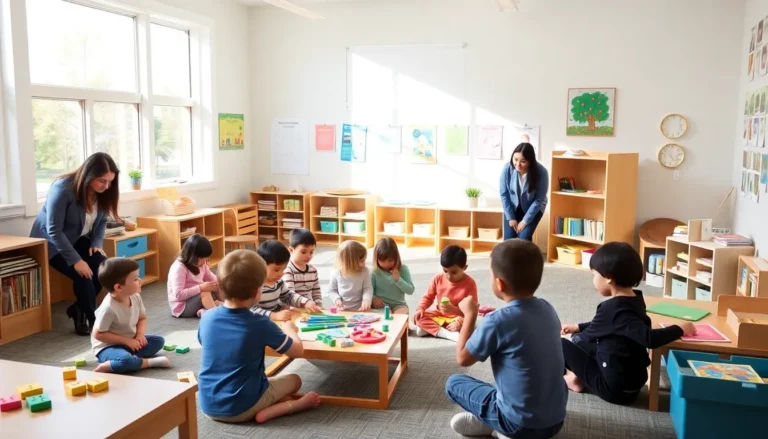
The prepared environment plays a vital role in Montessori classrooms. Materials are organized and accessible, inspiring curiosity and independence. Natural light floods the space, creating a warm and inviting atmosphere. Floor cushions, low shelves, and open areas promote movement and exploration. Each element encourages toddlers to engage with their surroundings at their own pace. This thoughtful arrangement fosters concentration, allowing children to focus deeply on their chosen activities.
Child-Led Learning
Child-led learning enables toddlers to take charge of their education. This approach supports exploration of individual interests, motivating children to participate actively. Educators guide rather than direct, stepping back to observe and provide assistance when necessary. Freedom to choose activities fosters critical thinking and decision-making skills. Social interactions flourish, as mixed-age groupings allow children to learn from one another. Mastery of skills develops organically, reinforcing a sense of accomplishment and confidence in young learners.
Montessori Activities for Toddlers
Montessori activities engage toddlers in meaningful learning experiences, fostering their independence and curiosity through hands-on exploration.
Practical Life Skills
Practical life skills serve as foundational activities for toddlers. These tasks include pouring, sweeping, and buttoning, which cultivate fine motor skills and coordination. Each activity encourages focus and concentration, enhancing the child’s ability to complete tasks independently. Emphasis lies on real-world applications, allowing toddlers to connect daily routines with learning experiences. Providing safe, accessible materials builds confidence and self-sufficiency, which contribute to the child’s sense of accomplishment. Regular practice of these skills facilitates emotional regulation and patience, crucial components for personal development.
Sensorial Activities
Sensorial activities enrich toddlers’ experiences by refining their senses. Engaging materials such as textured fabrics, sound boxes, or color tablets stimulate tactile, auditory, and visual exploration. Each activity promotes discrimination and classification, enhancing cognitive development. By interacting with various textures and sounds, children identify different qualities and characteristics in their environment. These activities not only support language development but also encourage focus and observation. When arranged thoughtfully, sensorial materials create an inviting environment for toddlers to explore their world fully.
Choosing the Right Montessori Program
Selecting a Montessori program requires careful consideration of various factors. Evaluating the approach, environment, and educator qualifications plays a key role in making an informed choice.
Factors to Consider
Classroom size significantly impacts learning. Smaller classrooms often lead to more personalized attention. The educator’s training is equally crucial. Montessori-trained teachers understand child development and can effectively guide exploration. Additionally, observe the classroom environment. A well-prepared space should feature accessible materials and encourage independence. Check for mixed-age groups, which promote social interaction. Finally, consider the program’s philosophy alignment with personal values. Each program may emphasize different aspects of the Montessori method.
Questions to Ask
Inquiring about teacher qualifications provides clarity. Ask whether educators hold Montessori credentials and how often they pursue professional development. Explore the curriculum depth. Does the program offer a variety of activities that encourage holistic growth? Understanding daily routines is also essential. How do they support child-led exploration within structured timeframes? Also, consider community engagement. Are parents involved in the program, fostering a collaborative atmosphere? These questions help ensure the program aligns with educational goals.
Embracing the Montessori method for toddlers can profoundly impact their early learning experiences. This approach nurtures independence and curiosity while creating a calm and engaging environment. By allowing toddlers to explore their interests and develop essential life skills, parents can foster a love for learning that lasts a lifetime.
Choosing the right Montessori program is crucial to maximizing these benefits. Parents should seek environments that prioritize accessibility and mixed-age interactions, ensuring their child receives personalized attention and guidance. With the right support, toddlers can thrive in a Montessori setting, gaining confidence and critical thinking skills that will serve them well in the future.